Pest dossier · Rodents
Norway rats
A ground-level suspect. Check burrows, reduce rubbish and close accessible entry routes.
Last updated October 3, 2026
Norway rat control starts with exclusion and removing food, water and ground-level shelter. Protected trapping and follow-up matter; poison alone cannot fix the conditions that support a burrow.
Know the suspect
Norway rats have a heavy gray body and a tail shorter than the head and body together. Extension gives a total adult length of roughly 11 to 19 inches including the tail. They commonly burrow near foundations or under debris, unlike roof rats that favor higher nests. Around DFW homes, inspect garages, rubbish areas and soil along hard edges. Door gaps, foundation openings and plumbing access can provide entry. For a property beside a creek, inspect building access rather than treating a sighting near water as proof of an indoor infestation. Texas A&M rat identification Extension burrow and access guidance
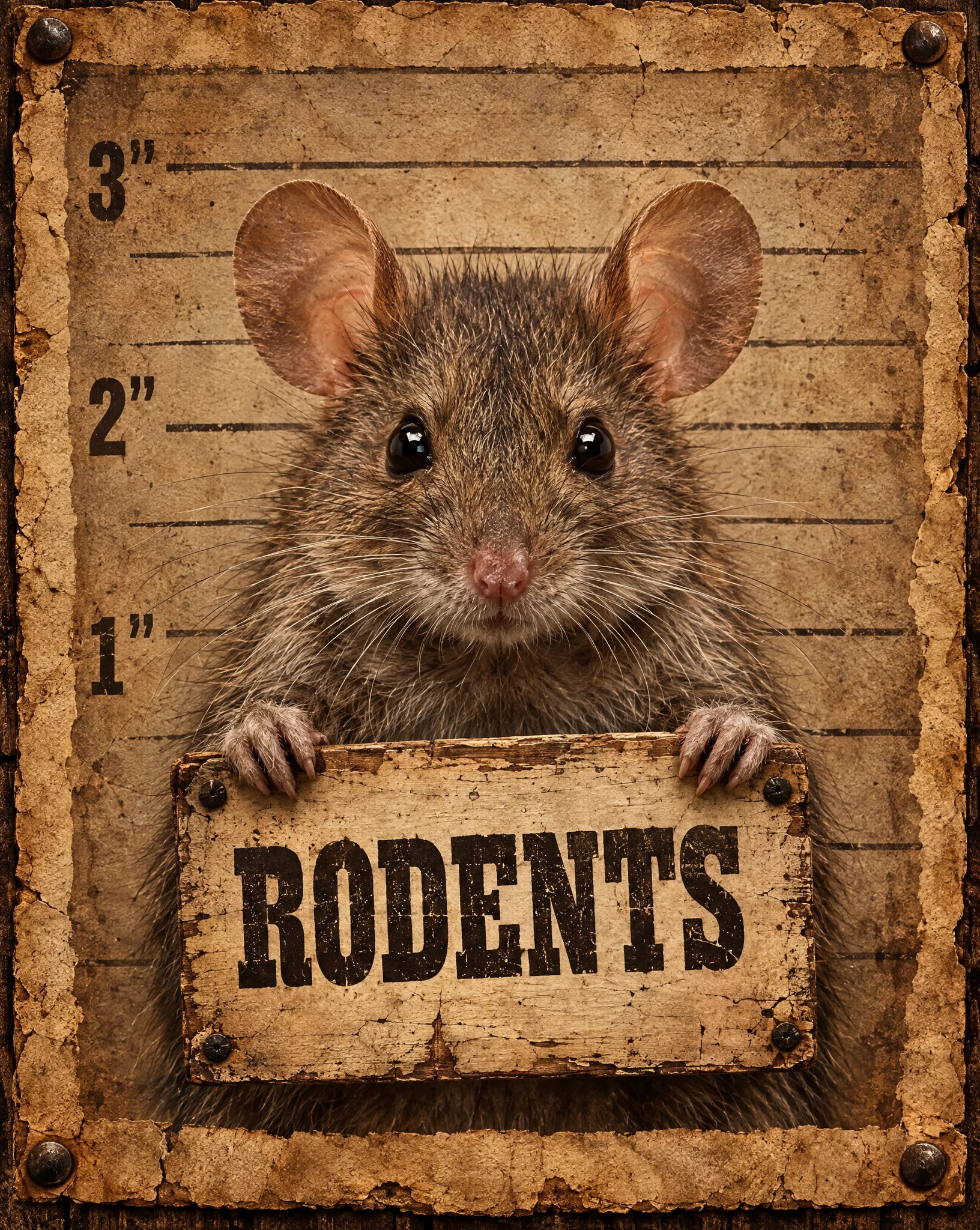
The wanted portrait is a stylized AI illustration, not an identification photograph. Compare the actual animal and its markings with an Extension identification guide.
What they can do
Rats can contaminate food and gnaw wiring, pipes and structural materials. Rodents may carry pathogens, but a sighting or dropping does not diagnose a particular disease. A burrow near the house is a reason to inspect activity and access, not proof of a specific amount of structural damage. Texas A&M guidance
Make the home harder to enter
- Remove rubbish, unused boxes and sheltered debris near the foundation.
- Secure food, feed and pet food in rodent-resistant containers.
- Keep outdoor waste covered and clean spilled food.
- Repair leaks and standing-water sources.
- Seal suitable entry gaps with durable rodent-resistant materials.
- Use properly sized snap traps along identified routes in protected locations inaccessible to children and pets; check them regularly.
Follow CDC wet-cleanup guidance for droppings and nests. Ventilate, wear gloves, wet the material with disinfectant and follow its contact time before wiping it up. Do not dry sweep or vacuum droppings. Heavy contamination or ventilation-system involvement requires added precautions or professional help. CDC rodent cleanup guidance
Chemicals you may encounter
Extension names diphacinone, bromadiolone and brodifacoum in rodenticide examples. These are not recommendations to place loose bait in the garage or pour poison into a burrow. Current product restrictions and labels govern use. EPA rodenticide restrictions Rodenticides can harm children, pets and wildlife; Norway rats may move bait, adding a non-target exposure risk. Protected trapping supports monitoring while exclusion removes access. Texas A&M guidance Extension bait-movement and safety guidance
The label is the law. Use a product labeled for the actual pest and location, and follow its directions for placement, amounts, protective equipment and re-entry. Keep products and treated areas away from children and pets as the label directs. Never use an outdoor-only pesticide indoors or assume more product works better. EPA pesticide safety
Seasonal watch
Use cooler-weather North Texas storage and garage checks as prompts to inspect ground-level access, burrows and rubbish. These prevention checks are not a fixed arrival calendar. Food, water and shelter can support activity whenever they are available; keep responding to fresh signs throughout the year.
When to get help
A qualified, licensed pest professional is warranted for recurring burrows, indoor activity or uncertain identification. Do not close an active burrow and assume the colony is gone; arrange an evidence-based control plan. Seek qualified help for heavy contamination, unsafe access or damaged building systems.
This field guide is educational and does not offer treatment bookings.
Common questions
Where do Norway rats usually nest?
They commonly burrow near foundations or under debris, unlike roof rats that favor higher nests.
How should droppings be cleaned?
Ventilate, wear gloves, wet the material with disinfectant and follow its contact time before wiping it up. Do not dry sweep or vacuum.
Is loose bait a substitute for exclusion?
No. Labels and restrictions govern rodenticide use, and exclusion is still needed to remove access.