Pest dossier · Insects
Subterranean termites
A hidden wood suspect. Check swarmers and mud tubes, then get an informed inspection.
Last updated October 3, 2026
Subterranean termite control starts with confirming activity and inspecting the structure. Moisture repair and reducing wood-to-soil contact lower risk, but they do not replace treatment of a confirmed infestation.
Know the suspect
Reproductive swarmers are dark brown to black, about 3/8 inch long, with a broad waist and equal-length wings that may be shed. Ant swarmers have a pinched waist and unequal wings. Workers travel between soil and wood through protected routes. In DFW slab homes, inspect foundation edges for mud tubes and openings where termites can reach wood. A fence infestation alone does not prove the house is infested. Texas A&M termite identification and inspection
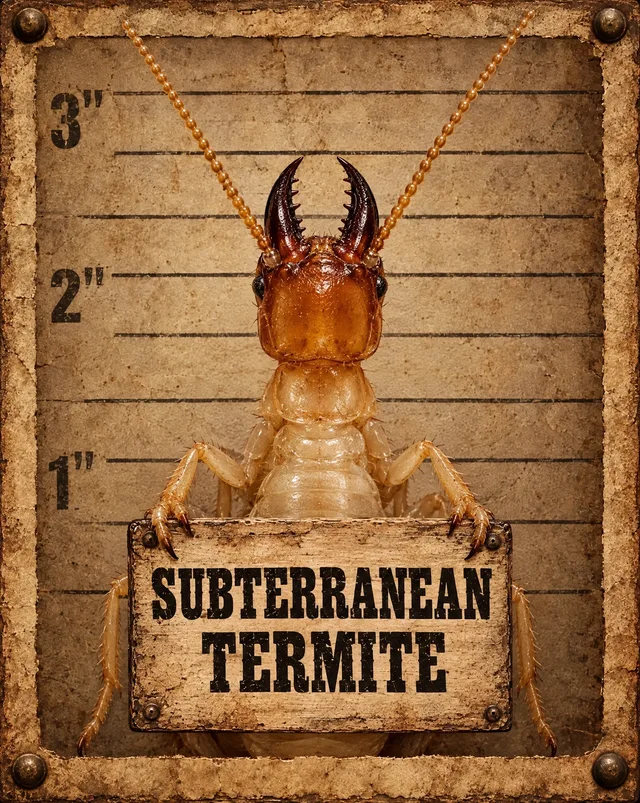
The wanted portrait is a stylized AI illustration, not an identification photograph. Compare the actual animal and its markings with an Extension identification guide.
What they can do
Subterranean termites feed on wood and can damage structures. Damage may be concealed; a visible tube does not reveal its full extent. Termites in yard wood warrant inspection, not an automatic conclusion that every building needs treatment. Extension termite guidance
Start with control, not a spray
- Keep stored wood, debris and soil buildup away from the foundation.
- Reduce wood-to-soil contact where repairs allow.
- Repair leaks and keep drainage from wetting the building edge.
- Inspect exposed foundation surfaces for mud shelter tubes.
- Save safely collected swarmers and record where and when they appeared.
- Leave part of a suspicious mud tube intact for a professional to examine.
Indoor swarmers are a strong reason for inspection, although individual insects may enter through an open window. Confirm the specimen rather than treating all winged insects as termites. Extension swarmer guidance
Chemicals you may encounter
Extension discusses fipronil and imidacloprid as examples of soil termiticides. These are not recommendations to trench, drill a slab or improvise a barrier. Product selection and placement require structural assessment, current labeling and appropriate credentials; bait and liquid systems have different limits. Extension treatment overview
The label is the law. Use a product labeled for the actual pest and location, and follow its directions for placement, amounts, protective equipment and re-entry. Keep products and treated areas away from children and pets as the label directs. Never use an outdoor-only pesticide indoors or assume more product works better. EPA pesticide safety
Seasonal watch
Use North Texas spring maintenance as a prompt to inspect window areas and foundation edges. Extension reports Texas swarms most often between February and May, but they can occur at other times. A fixed calendar cannot clear a home of termite activity. Extension seasonal guidance
When to get help
Indoor swarmers, mud tubes on the structure or unexplained wood damage warrants an inspection by a qualified, licensed pest professional experienced with termites. Seek a structural assessment if damage affects the building, and do not rely on surface spray alone.
This field guide is educational and does not offer treatment bookings.
Common questions
Does a termite in the yard mean the house needs treatment?
No. A fence infestation alone does not prove the house is infested. Inspect the structure for evidence.
Should I remove every mud tube?
Leave part of a suspicious mud tube intact for a professional to examine.
Are termite swarms only in spring?
Extension reports Texas swarms most often between February and May, but they can occur at other times.
Field notes on this suspect
- Field notes · SeasonalA weather-dependent, season-by-season guide to the pests North Texas homeowners commonly see, with what to watch and what to do.
- Field notes · IdentificationAntennae, waist and wings separate termite swarmers from flying ants. Here is how to tell them apart and what swarmers indoors mean.