Pest dossier · Insects
Mud daubers
A mud-building visitor. Recognize the nest and know when leaving it alone makes sense.
Last updated October 3, 2026
Mud dauber management starts with confirming that the nest belongs to a solitary wasp. Leaving a remote nest alone is often reasonable; routine spraying is not the first step for a mostly non-aggressive visitor.
Know the suspect
Adults are about 3/4 to 1 inch long, with a long, slender waist. Colors range from black with yellow markings to blue-black. They make small mud tubes under eaves, in attics and under shed roofs. Around DFW homes, inspect these sheltered sites from the ground. Open garages and gaps give access to protected nesting spots; a mud tube is different from a paper comb. Texas A&M wasp identification guide
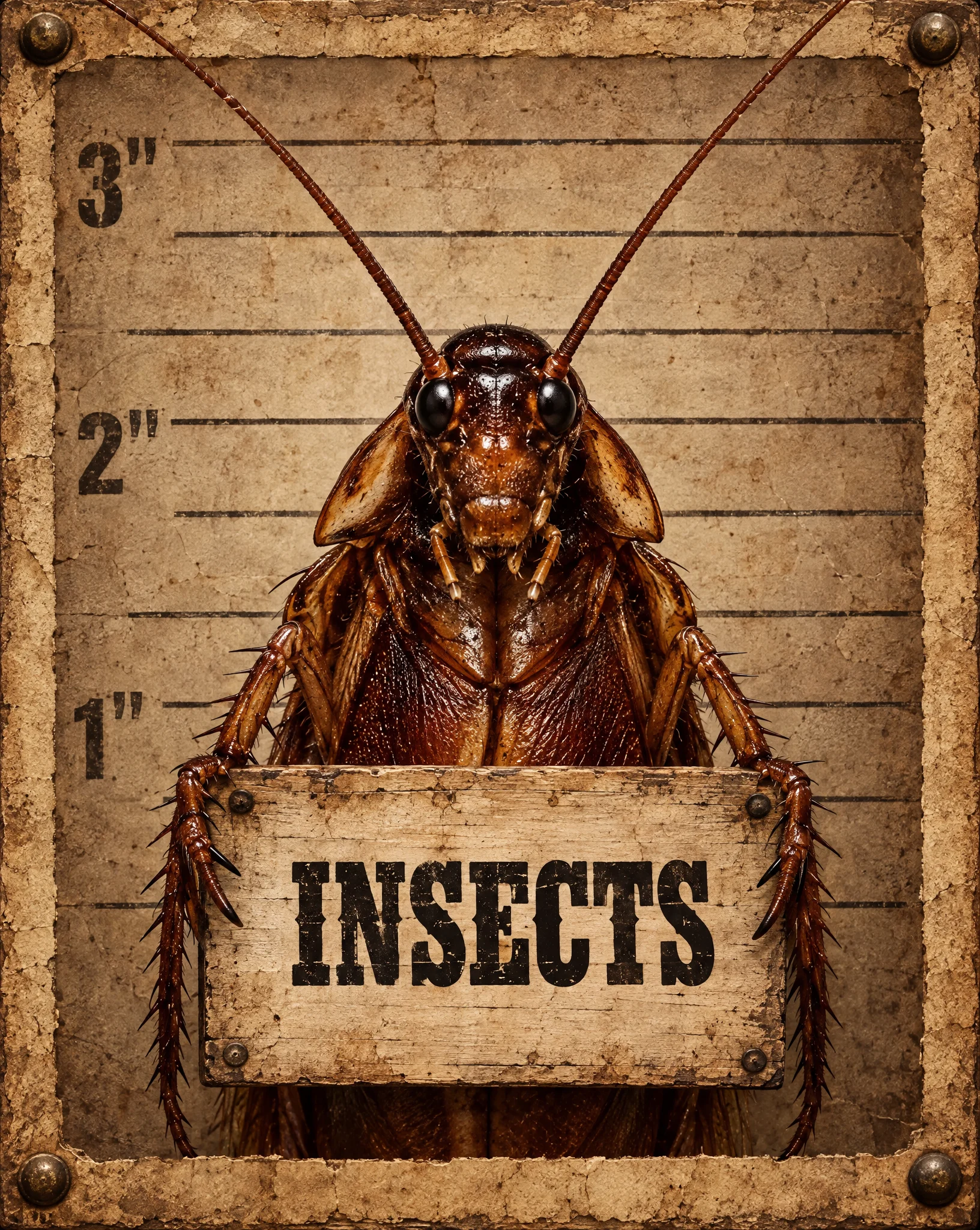
The wanted portrait is a stylized AI illustration, not an identification photograph. Compare the actual animal and its markings with an Extension identification guide.
What they can do
Mud daubers provision nests with spiders and are generally beneficial. Unlike social wasps, females do not defend a community nest. Solitary wasps rarely sting unless mishandled or trapped against skin; "rarely" does not mean harmless to handle. Confirm the insect before assuming a low sting risk. Extension solitary wasp guidance Extension wasp overview
Start with control, not a spray
- Observe the wasp and nest without handling either.
- Leave remote nests alone where people are unlikely to contact them.
- Inspect stored equipment before use, especially in open sheds.
- Repair screens and close unused garage or shed doors.
- If removal is necessary, first confirm the species and safe access; seek help for uncertain or high nests.
Extension describes physical removal of mud nests. Do not apply that advice to an occupied paper wasp or yellowjacket nest, and do not climb or reach blindly into a nesting site. Removing a nuisance mud nest does not require spraying the entire eave or yard. Texas A&M guidance
Chemicals you may encounter
Routine pesticide use is often unnecessary for these solitary wasps. Extension discusses labeled insecticides when control is justified, but no ingredient is singled out here as a mud-dauber recommendation. An ingredient or product marketed for wasps does not establish suitability for a particular sheltered nest. Extension management guidance
The label is the law. Use a product labeled for the actual pest and location, and follow its directions for placement, amounts, protective equipment and re-entry. Keep products and treated areas away from children and pets as the label directs. Never use an outdoor-only pesticide indoors or assume more product works better. EPA pesticide safety
Seasonal watch
Use North Texas warm-weather checks of porch covers and shed roofs to notice new mud building before it becomes a nuisance. This is a maintenance prompt, not a fixed emergence calendar or proof that all mud tubes are active. Observe actual activity before deciding whether removal is needed.
When to get help
Get a qualified, licensed pest professional when identification is uncertain, nests are inaccessible or activity is entering living areas. Ask whether leaving the nest alone or physical removal is enough. Seek medical advice for a troubling sting, and emergency care for breathing difficulty or a serious allergic reaction. Texas A&M guidance
This field guide is educational and does not offer treatment bookings.
Common questions
Do mud daubers defend nests like yellowjackets?
No. Unlike social wasps, females do not defend a community nest, though mishandled solitary wasps can sting.
Should I spray every mud nest?
No. Leaving a remote nest alone is often reasonable, and physical removal may be enough when removal is necessary.
What is their nest made of?
They make small mud tubes under eaves, in attics and under shed roofs, rather than an open paper comb.